
Most of what has been written about microdosing was built around a steady, predictable, male body. If you have a cycle, you know your body isn’t the same every day, and it isn’t supposed to be.
Your energy, mood, sleep, and sensitivity shift across the month, so the same dose can feel different from one week to the next. That’s not you doing it wrong. It’s information that got missed when microdosing went mainstream.
This post covers what we know, what we don’t, and how to work with your cycle instead of around it or against it. Take what resonates and leave the rest.
Why cycle awareness matters when you microdose
Across a typical cycle, estrogen and progesterone rise and fall in a pattern that also touches serotonin, the neurotransmitter system that psilocybin interacts with. Research on exactly how hormones and psychedelics affect each other is still limited, and much of the early microdosing research was done mostly on men or didn’t track cycle phase at all. So no one can hand you a definitive chart.
What we can say is that many women report noticing differences by phase, and that paying attention gives you better data than any generic protocol. Your own tracking is a legitimate source of knowledge here.
The four phases, in plain language
Menstrual phase (roughly days 1 to 5). Hormones are at their lowest. Many women feel tired, tender, or more inward. Some find this a good time for rest, gentle movement, and journaling. Others prefer to skip a dose and see how they feel without one.
Follicular phase (roughly days 6 to 13). Estrogen climbs. Energy and focus often come back online. This is when many women feel most open to new routines, so it can be a natural window to begin a protocol or check in on how it’s going.
Ovulatory phase (around days 14 to 16). Estrogen peaks. Some women feel social, confident, and sensitive to stimulation at the same time. If you tend to feel wired or anxious, you may notice it more in this phase.
Luteal phase (roughly days 17 to 28). Progesterone rises, then both hormones drop before your period. This is where PMS or PMDD-type symptoms show up for some women. It’s also where many women find that they need to adjust, whether that means a lower amount, a rest day, or extra support around sleep and food.
Cycle lengths vary. If yours is irregular, or you’re in perimenopause or menopause, use your own patterns instead of specific day counts.
Protocols: what to consider
Common microdosing schedules follow a rhythm of dosing on one day and resting for the next one or two. If you’re new to this, the schedule matters less than the structure: a dose day, then days off to observe how you feel.
A few cycle-aware ideas to consider:
- Track your phase, mood, energy, sleep, and appetite in a simple journal or app for at least two full cycles (ideally three) before drawing conclusions.
- Change one variable at a time, so you know what caused what.
- Notice whether you feel better with a lower amount or an extra rest day during the luteal phase, and let that shape your schedule.
- Consider a pause if you feel emotionally raw, overstimulated, or unwell. Stopping is a valid choice, not a failure.
Hormonal birth control, medications, and safety
Whether hormonal birth control changes how psychedelics feel is not well studied. If you use it, or an IUD, a patch, or hormone therapy, treat your experience as your own data and talk with your provider.
(Read Part 2 of the blog for what the most recent research says about women’s hormones and psychedelics.)
Medication interactions also matter. Some antidepressants, mood stabilizers, and other prescriptions can interact with psilocybin, and some combinations carry real risk. Please talk with your prescriber before you microdose, and never stop a medication on your own.
Medicine choice and hormonal support
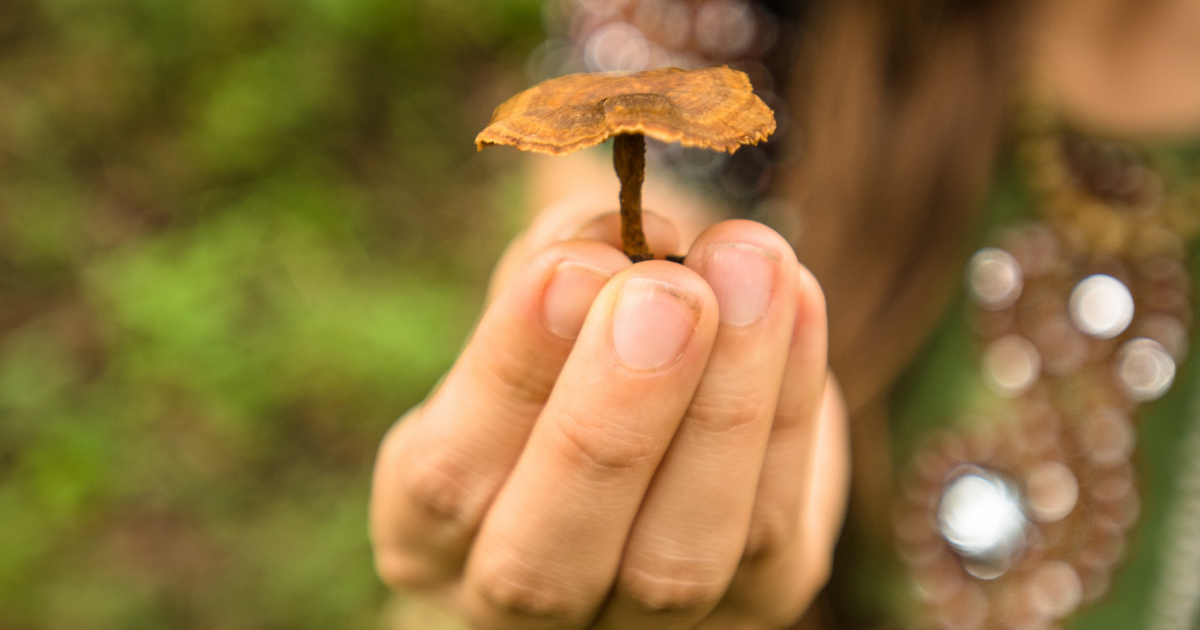
Psilocybin gets most of the attention, but it isn’t the only tool. Some women build a routine around gentler options, such as functional mushrooms, and pair them with the basics that support hormonal health: steady blood sugar, consistent sleep, movement, and stress relief.
Mescaline, also known as San Pedro or Huachuma, is a cactus that is also showing promise in supporting women’s hormonal function, nervous system balance, and a grounded sense of steadiness in the body.
Have questions about microdosing, product safety, or whether this kind of practice is a good fit for you? Reach out for more information.
This post is educational and not medical advice.
Bring it back to your body
Your diet is more than just what you eat. It’s everything you consume, and that includes the information you take in about your own body.
A cycle is not an obstacle to work around. It’s a monthly conversation with your body that you can learn to listen to.
If you’d like support building a cycle-aware practice, I offer 1:1 microdose coaching and microdose-integrated therapy through Intuitive Life Wellness.
Disclaimer: Microdosing is a wellness practice. It doesn’t replace medication, therapy, or medical care. In Colorado, natural medicine is regulated under the Natural Medicine Health Act, and personal use is decriminalized for adults 21 and older. Legal and wise aren’t the same thing, so harm reduction still applies: reliable sourcing, a low starting point, a supportive setting, and someone you trust who knows what you’re doing.
Microdosing for Women series
Part 1: Microdosing and Your Menstrual Cycle (you are here)
Part 2: Psilocybin, Mescaline, and Women’s Hormones
Part 3: Microdosing Through Perimenopause and Menopause
Part 4: A Cycle-Aware Microdosing Journal