Intuitive Life Wellness · Professional Training
Your clients are already microdosing
The question isn’t whether you approve. It’s whether you’re competent when it comes up.
Clinical Microdosing Integration Training is a 16-week certification for licensed therapists and practitioners who want to support clients through self-directed microdosing with actual clinical skill: screening, psychopharmacology, treatment planning, documentation, and ethics.
You’ll complete the full 90-day protocol yourself, alongside your cohort, while you learn to guide it.
16 WEEKS · LICENSED CLINICIANS ONLY · 6 SEATS · BEGINS JANUARY 09, 2027
Founding cohort rate through November 15. Applications close December 18, 2026.

The situation
Here’s what usually happens.
A client mentions, somewhere around minute forty, that a friend gave them some capsules and they’ve been taking them on Mondays and Thursdays and honestly they feel better than they have in two years.
And something in you goes very still.
Because you have questions. You want to know what’s in the capsules. You want to know whether they’re on an SSRI and what that means. You want to know if there’s any family history of bipolar disorder you should be worried about. You want to know whether you’re supposed to document this, and how, and what happens to that documentation if it ever gets subpoenaed. You want to know whether saying anything supportive puts your license at risk, and whether saying nothing puts your client at risk.
So you say something like “tell me more about that.” And you make a note that you’ll figure it out later.
Later doesn’t come, because there’s nowhere obvious to go. The research literature is thin and mixed. The trainings are mostly built for coaches. Your consultation group has opinions but not guidance. And the entire topic sits in a legal grey zone that nobody wants to be the first to write down.
Meanwhile your client keeps microdosing. They’re just no longer bringing it up.
None of that is a failure of clinical skill. It’s a gap in available training and support, and it’s a gap almost every therapist I know is standing in. Psilocybin didn’t come up in your graduate program, and the field hasn’t caught up to what’s already happening in your caseload.
But it does mean the person in the room with actual clinical training ends up outside the conversation; the client goes looking for guidance somewhere with worse screening practices and better search rankings.
That’s the gap this training is built to close.
The program
What this training is
A 16-week microdosing training for therapists and licensed practitioners, built for one purpose: so that when a client is microdosing, you know exactly what to do.
Not vaguely supportive. Not carefully neutral. Competent. With a screening protocol, a contraindication framework, a working knowledge of the medication interactions, documentation that is both honest and prudent, and a felt understanding of the client’s perspective underneath all of it.
01
Everyone in the room is licensed.
This isn’t open to coaches, guides or wellness practitioners. Not because that work lacks value; but because a mixed room limits the clinical conversation this training is focused on. Here we begin from the assumption that you have a diagnostic vocabulary, a chart, a license to protect, and a board that would like a word if problems arise. Everything is built to that standard, with similar scope of practice and documentation requirements in mind.
02
It’s actually clinical.
Most microdosing trainings, including the expensive ones, say plainly in their own materials that they do not teach clinical protocols and inclusion. That’s an honest disclosure and I respect it. It also means those programs cannot answer your full questions.
This one teaches about clinical screening, assessment and repeated measures, treatment planning and documentation, scope of practice, and absolute versus relative contraindications.
03
You do the protocol yourself.
Not a demonstration. Not a weekend immersion. The full 90 days, synchronized with your cohort, using the same Embodied MIcrodosing Program you can offer your clients.
I want clinicians who know what week six feels like. Who have had the experience of a protocol that needed adjusting and had to figure out how they knew. Who understand from the inside why the tracking matters and why people stop doing it around day forty.
Participation in the experiential portion of the program is always your choice and is never required. You can complete the whole clinical curriculum without it and receive the same certificate as everyone else. The program does not provide, sell, or require any natural medicine. More on that in the FAQ.
Fit
Who this is for
This is for you if
- You’re a licensed therapist or mental health clinician (LPC, LCSW, LMFT, PsyD, PhD, PMHNP, LAC or equivalent) with an active license in good standing
- Clients have raised microdosing with you and you’ve felt the gap between what you know and what they’re asking
- You want to integrate this into the practice you already have, rather than build a new career
- You’re willing to do your own 90 days, and you understand why that’s the point
- You understand the need for the boring parts (the screening, the interactions, the charting) than only the beautiful parts
- You’re comfortable holding real clinical rigor and genuine reverence for the medicine in the same hand, without collapsing into either one
This probably isn’t for you if
- You’re not licensed or pre-licensed. This one has a hard line. I’d point you toward a coaching-track training instead; there are good ones
- You’re looking for training to administer psilocybin or sit with clients during dosing. That’s a different scope and a different program (see the FAQ)
- You want a weekend certificate. This is sixteen weeks and there’s homework. Here, you’re building your own relationship and internal understanding of the medicine; you’re not regurgitating some videos and readings
- You’re hoping for a program that treats psilocybin as a pharmaceutical with a fancier origin story. That’s not the framework here
Curriculum · Part one
The clinical curriculum
Three live clinical workshops for licensed therapists, three hours each, Saturday mornings.
Workshop One
Foundations
Saturday, January 9, 2027 · 3 hours
The mechanism and the evidence, including where the research is stronger or weaker and how to talk about that with clients. Dosing science and the major protocols. How to build and adjust an individualized protocol. Discussing product safety and harm reduction practices while remaining within scope of practice. Tracking as a clinical instrument and beginning your own tracking log. Set, setting, ritual and intention, and why those aren’t soft additions but outcome variables.
Your own 90-day protocol begins the following week.
Workshop Two
Screening, Psychopharmacology & Risk
Saturday, February 20, 2027 · 3 hours
Absolute versus relative contraindications and how to hold each one. The medication conversation in more depth: SSRIs and SNRIs, MAOIs, lithium, and more. What’s documented, what’s theoretical, and how to talk about it without practicing medicine.
The referral decision. When a prescriber must be involved, when they need not be, and what to do when your client asks you not to contact theirs. Structuring a screening interview. Choosing an assessment battery. Recognizing an adverse event and what to do at 9pm on a Saturday.
Workshop Three
Ethics, Law & Documentation
Saturday, March 27, 2027 · 3 hours
The workshop nobody else teaches, and the one most relevant to your license.
Scope of practice. What “supporting a client who microdoses” is and, precisely, what it isn’t. The federal/state gap and how Schedule I status interacts with Colorado’s Natural Medicine Health Act, Oregon’s framework, and the majority of states where none of that applies. Documentation: how to chart self-directed use honestly without creating unnecessary liability. Informed consent. Duty to warn. Boundaries and disclosure around your own use. Malpractice coverage and psychedelic exclusions. Advertising ethics. Cultural humility, indigenous lineage, and reciprocity as a practice.
Two of its three hours are designated ethics; two more ethics hours are woven through Weeks 2, 6, 9 and 12.
Curriculum · Part two
The experiential curriculum
The Embodied Microdosing Program – Consisting of thirteen weekly group sessions, Wednesday evenings, running alongside the clinical curriculum, so you experience the program from the participant’s seat. This is the client-facing program that you get to experience as a participant, doing the work rather than observing it. Each week closes with a clinician lens: how this session is run, what tends to surface, where it goes sideways, and what the clinical judgment call actually is.

Weeks 1–4 · SELF
Inner parts work and Self-Energy. Nervous system support, nutrition and embodiment. Intuition and inner healing wisdom, energetics, and the difference between an intuitive signal and an anxiety signal.

Weeks 5–6 · OTHERS
Unmasking, belonging, and the role of connection in sustained wellbeing. Protective patterns in relationship. Boundaries as reclaimed power rather than defended territory.

Weeks 7–8 · NATURE
Earthing and grounding. The healing relationship with plants. Stacking with herbs and supplements. Rooting a practice in lunar, seasonal and menstrual cycles, and cycle-aware protocol design, which almost nothing in the literature addresses.

Weeks 9–11 · SPIRIT
Plant spirit, sacred reciprocity, and reverence. Grief and letting go, which arrives in this work whether or not anyone planned for it. Then meaning, purpose and joy as dimensions of healing distinct from symptom relief. Releasing before arriving, so the joy is earned rather than interrupted.

Weeks 12–13 · TRUST & SUSTAINABILITY
Moving from protocol-following to intuitive dosing, and what that trust unlocks. Reviewing ninety days of data. Building a sustainability plan that outlasts the container.
Four data check-ins are woven through at the close of each pillar, so protocol review stays continuous rather than getting saved for the end.
Weeks 14–16
Then you turn around and integrate the work as a practitioner
Week 14. Case discussions. If you have any clients who are already microdosing, you can present a real client from your own caseload, de-identified, and receive supportive feedback on your clinical reasoning or questions your bring in to the discussion. If you do not have a client to bring in for consultation, I’ll have real-life examples for us to discuss if needed.
Week 15. Integration of microdosing in your own practice. Administering the post-assessment and reading 90-day change, how to deliver the program you are now certified to run within your individual practice.
After this session, you’ll be asked to provide structured feedback of your own regarding your experience as an Embodied Microdosing program participant, on the client-facing protocol from a clinician’s eye. Founding cohort trainees are shaping the program that later cohorts will receive; part of the exchange for the founding rate.
Week 16. Closing Ceremony & Certification. We close the way the client program closes, with ceremony rather than an abrupt ending. Certificates are issued at this point, upon completion of all requirements.
Actual clinical practice, with real client examples
Certification here isn’t an attendance award. Across the sixteen weeks you’ll get experience with real written clinical work, on your own past or current, de-identified clients: and Intake Screening Summary, a Treatment Plan Draft, and a Termination & Sustainability Plan.
Ideally these follow the same client, so there’s a thread running through the program rather than three disconnected exercises. Each one is reviewed and returned with individual written feedback. These will also be the cases we discuss during Week 14 as a group for wider support and feedback. They’re completion-based rather than graded on a curve; if something’s incomplete you get a second pass at it. The point is to help you build confidence in your documentation before you start writing real records.
If you don’t have a suitable client example (no current caseload, nobody where microdosing is live, or a professional community small enough that de-identification isn’t realistic), you can work from one of three composite cases instead, provided to everyone as well, to save and review for additional learning.
And a final competency quiz, issued at the end of Week 14 and completed at home. It’s built from the three composite cases: for each one you identify the red flags and the green flags and name the clinical concept each represents. It tests the integration of program knowledge as a whole and helps you identify gaps or strengths for further learning. Must be completed to receive certificate.

What you leave with
You don’t leave with a course.
You leave with a program.
Every trainee is approved to use the complete Embodied Microdosing toolkit in their own practice:
- The client workbook. The full 90-day participant workbook, session by session
- Screening and intake instruments. Including the contraindication framework
- The assessment battery. Pre, post, and repeated measures
- Informed consent and legal acknowledgment forms. Written for this specific situation
- The 90-day tracking log. Including cycle-aware tracking
- Thirteen session leader guides. With timings, prompts, meditations and discussion structure
- Treatment plan templates and progress note language
- The product safety conversation guide. How to have it, and where the line is
- Adverse event protocol
- The annotated resource library. Research, readings, and client handouts
- The Prescriber Referral Network. A directory of psychedelic knowledgeable prescribers open for consultation and referral
You could run your first client cohort the month after you certify. Several of you probably will.
About CE credit
This program is not currently approved for formal CE credit. However, it does qualify for Colorado’s Natural Medicine Facilitator requirements for continuing education related to psychedelics., including the ethics portion.
The program is 35.5 instructional hours, of which 4.0 are designated ethics, delivered as three blocks inside the Ethics, Law & Documentation workshop, plus four thirty-minute modules woven into Weeks 2, 6, 9 and 12. Your certificate itemizes all seven by module and date, so if your board asks where the hours came from, you can show them line by line.
The ethics hours are spread out on purpose. Four hours of ethics on one Saturday produces compliance and not much else. Placed next to the clinical content each module actually comments on, the same four hours change how you practice.
Continuing education acceptance is always determined by your own board. If you’re enrolling specifically for CE, confirm applicability with your licensing body first.
You’ll have supports now for you and clients
A real part of this training is learning where your scope ends, and when a medication question stops being yours and becomes a prescriber’s. That teaching only works if there’s somewhere to send people.
So you also leave with access to the Prescriber Referral List: a directory of prescribers who are knowledgeable with psychedelics and medications for to see referred clients who need medication support or deeper assessment.
After your certification, you’ll have access to ongoing consultation from myself, and connection to a private clinician community for general, de-identified questions and networking.
No other microdosing training I’m aware of offers this, and it’s the difference between a scope boundary you understand and one you can actually practise inside.
Your instructor
Who’s teaching this
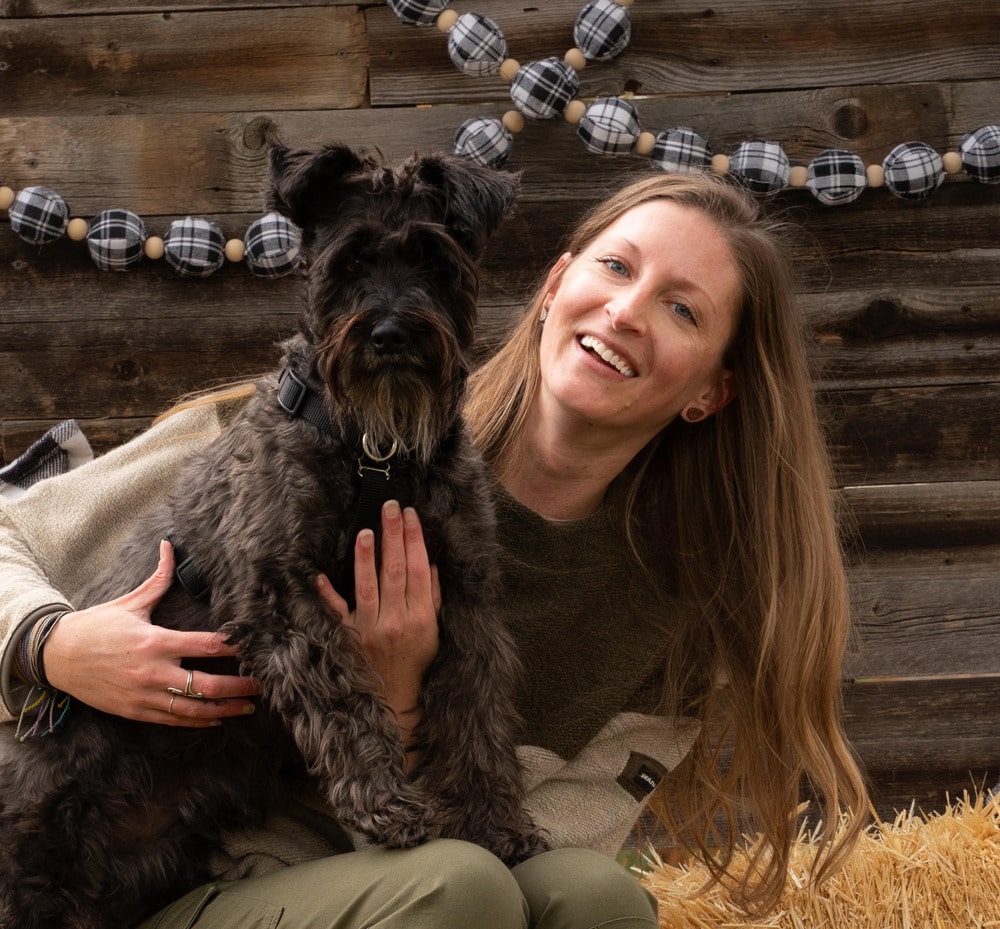
I’m Jessica Eden, LCSW, LAC, ADS, NMIT, founder of Intuitive Life Wellness, a holistic psychotherapy and wellness practice specializing in psychedelic therapy and wellness in Colorado.
I’m a NADA Registered Trainer and a licensed clinical social worker and addiction counselor. My practice integrates psilocybin- and ketamine-assisted therapy, acudetox, microdosing support, and clinician training.
I built this program because I kept getting the same call from colleagues: a client just told me they’re microdosing, what do I do. There was no good place to send them. There still mostly isn’t.
I’ll say the thing I say in every room: I’m skeptical of how quickly this field is being medicalized and commodified, and I don’t think the answer to that is to pretend rigor and reverence are opposites. This training holds both. That’s the whole design.
Investment
Pricing
6 SEATS
Founding Cohort
$2,450
Available
Through Nov 15, 2026
Payment plan
$450 deposit + 4 × $500
Early
$2,950
Available
Nov 16 – Dec 4, 2026
Payment plan
$450 deposit + 4 × $625
Standard
$3,950
Available
Dec 5 – Dec 18, 2026
Payment plan
$450 deposit + 4 × $875
Installments are charged on the first of the month, January through April. Full payment is required to receive your certificate.
About the founding rate
The founding rate isn’t a sale. It’s an exchange.
Founding trainees pay $2,450, which is $1,500 below the standard rate, in return for three specific things: full participation in the program, a written testimonial with permission to use it, and detailed structured feedback on your experience and observations from a clinician’s perspective.
This founding rate is only available for Cohort 1 (starting January 9th).
I’d rather pay you honestly for shaping the program than pretend to discount it.
What the price includes
34.5 hours of live, small-group instruction with the same group and facilitator. Home-study materials. Roughly 64 total program hours. A 1:1 session for individualized needs and clinical questions. The complete clinical microdosing toolkit, licensed for your practice. Individual written feedback on your written clinical work and quiz responses. Certification and the alumni pathway.
For context: the leading microdosing facilitator training runs about $4,900, and states in its own materials that it does not discuss diagnosis, clinical protocols, or medication considerations, and admits non-clinicians. Full psychedelic-therapy certificate programs run $8,000–12,000 over nine to twelve months, and rarely include microdosing. This sits deliberately between them: focused, clinical, and finishable inside one season.
Does not include the cost of your own medicine, which you source yourself. We’ll talk about that in your 1:1 session.
Dates
The schedule
| Applications close | Friday, December 18, 2026 |
| Decisions issued | No later than December 23, 2026 |
| Individual intake sessions | December 18 – January 7 (scheduled individually) |
| Workshop 1: Foundations | Saturday, January 9 · 9:00 AM – 12:15 PM MT |
| Protocol Day 1 | Week of January 10th |
| Weekly sessions, Weeks 1–13 | Wednesdays, 6:00 – 7:30 PM MT, January 13 – April 7 |
| Workshop 2: Screening & Psychopharmacology | Saturday, February 20 · 9:00 AM – 12:15 PM MT |
| Workshop 3: Ethics, Law & Documentation | Saturday, March 27 · 9:00 AM – 12:15 PM MT |
| Protocol Day 90 | Week of April 11th |
| Focus groups | Wednesdays, April 14 & 21 · 6:00 – 7:30 PM MT |
| Closing Ceremony & Certification | Wednesday, April 28 · 6:00 – 7:30 PM MT |
All sessions are held virtually. Weekly sessions are recorded for make-up; workshops and the closing ceremony are not.
FAQ
Questions people actually ask
Does this certify me to give psilocybin to clients, or sit with them during a session?
No, and I want to be unambiguous about that. This certification covers supporting clients who microdose on their own, outside of session. Administering, dosing in session, or sitting with a client during an experience is a different scope with different legal requirements; in Colorado that means licensure through the Natural Medicine Division and a state-approved facilitator training. That’s a separate, more advanced program and it’s on my roadmap; coming soon!
Is this legal? Am I putting my license at risk?
Two separate questions, and they deserve separate answers.
The training is education. Learning about psilocybin, screening, contraindications and documentation is legal everywhere.
The personal 90-day protocol is not. Psilocybin is a Schedule I substance federally and illegal to possess in most states, with narrow exceptions in places like Colorado and Oregon. You would be sourcing and using it at your own discretion and your own legal risk. This program does not supply or administer any controlled substance. I ask every applicant to acknowledge this explicitly, and I’d rather you take it seriously than take it lightly. If it’s not a risk you’re willing to hold, you can do the whole clinical curriculum without the personal protocol; I’ll think no less of you, the content is identical, and so is the certificate.
Your license is what the four documented ethics-and-law hours are for, because “is this a risk” is the wrong question and “how do I manage this risk competently” is the right one.
What if I don’t want to microdose myself?
Then you don’t, and nothing about your certificate changes. If you decide the experiential portion isn’t right for you, for any reason, you complete the entire clinical curriculum without it. You attend everything, do all the clinical work, write all the clinical practice pieces, sit the quiz, and receive the same certificate as everyone else. There is no separate track and no designation on your certificate. Tell me at application and we’ll talk it through.
I’m not in Colorado. Does this still work for me?
Yes for the clinical training, which is not state-specific. Workshop Three covers the legal landscape across frameworks (Colorado, Oregon, decriminalized municipalities, and the majority of states where none of that applies) because many of you may have telehealth clients or licenses in more than one state. What differs by state is your personal legal exposure during the protocol, and we address that individually in your individual session and throughout the training.
I’m on an SSRI. Can I still do this?
It’s not an exclusion in and of itself. And it’s one of the most common questions, with no blanket answer, which is exactly why we spend so long on it in Workshop Two. Note it on your application and we can discuss it in a follow-up conversation before you enroll. It’s also one of the primary combinations you’ll see with clients wanting to microdose, and that discussion and training is a part of the psychopharmacology workshop and this program
What if I miss a session?
Weekly sessions are recorded, and you can miss two of the thirteen and still certify. Workshops are not recorded for make-up except in genuine identified need. The closing ceremony is highly recommended; it’s one of the components most therapists don’t get exposure to and marks the significant work you’ve done over the last four months.
How much time per week, realistically?
The 90-minute weekly session, plus about 30-60 minutes of self-study, reading and tracking. Workshop weeks add 3 hours on a Saturday morning. The written clinical work comes to around two hours in total across the whole program; they can be completed in stages throughout the program, or at the end, due by Week 15. There’s also a take-home quiz at the end. Call it 2-3 hours a week on average, give or take.
Do I get materials I can use with my own clients?
Yes. The complete toolkit, licensed for use in your practice. Workbook, screening tools, assessment battery, consent forms, tracking log, all thirteen session facilitator guides, treatment plan templates and progress note language. That license is for your own practice use; it doesn’t extend to training other clinicians or reselling the materials.
Is there a payment plan, and what’s the refund policy?
There’s a payment plan at every tier: a $450 deposit at acceptance, then four monthly installments on the first of the month, January through April.
The deposit is non-refundable once your seat is held, because holding a seat in a six-person cohort has a real cost. The full policy is in the enrollment agreement and I’ll send it before you pay anything. If you screen out during intake for a health reason, you’re refunded in full, or you continue without the personal protocol; your choice. And if I cancel the cohort for any reason, everyone is refunded in full, deposit included.
Can I talk to you before I apply?
Yes. Email me at jessica@intuitivelifewellness.com with any questions and we’ll chat through them. I’d rather have a short conversation than have you guess.
A free clinical guide
Not ready to apply? Take the guide.
Supporting a Client Who Microdoses is the practical part of this training, written up as a quick reference for licensed clinicians. It’s free, and covers the following:
- The contraindication framework, absolute and relative
- The medication interactions that actually matter, with the strength of the evidence stated for each
- When to involve a prescriber, and when doing it costs you client trust for no clinical gain
- Five ways to phrase a progress note
- What the research actually shows, including the inconvenient parts

A small room, on purpose.
Six seats isn’t a scarcity tactic; it’s the number at which sixteen weeks of shared work still functions as a container. A room where everyone has done their own ninety days is a particular kind of room, and it doesn’t survive being scaled without losing personal connection.
If you’ve been quietly wondering how to do this well, this is the training I wished existed when colleagues started calling.
Take your time with the decision. Sixteen weeks is a real commitment and I’d rather you arrive certain.
Applications are reviewed as they come in, through December 18, 2026. Questions first? Email jessica@intuitivelifewellness.com.
This training is education. It does not supply or administer any controlled substance, and it does not certify anyone to administer psilocybin or to sit with a client during a dosing session. Psilocybin remains a Schedule I substance under federal law. The program is not currently approved by NBCC, NASW or APA; continuing education acceptance is determined by your own licensing board. Enrollment terms are set out in the enrollment agreement, which is sent before any payment is requested.