Overview
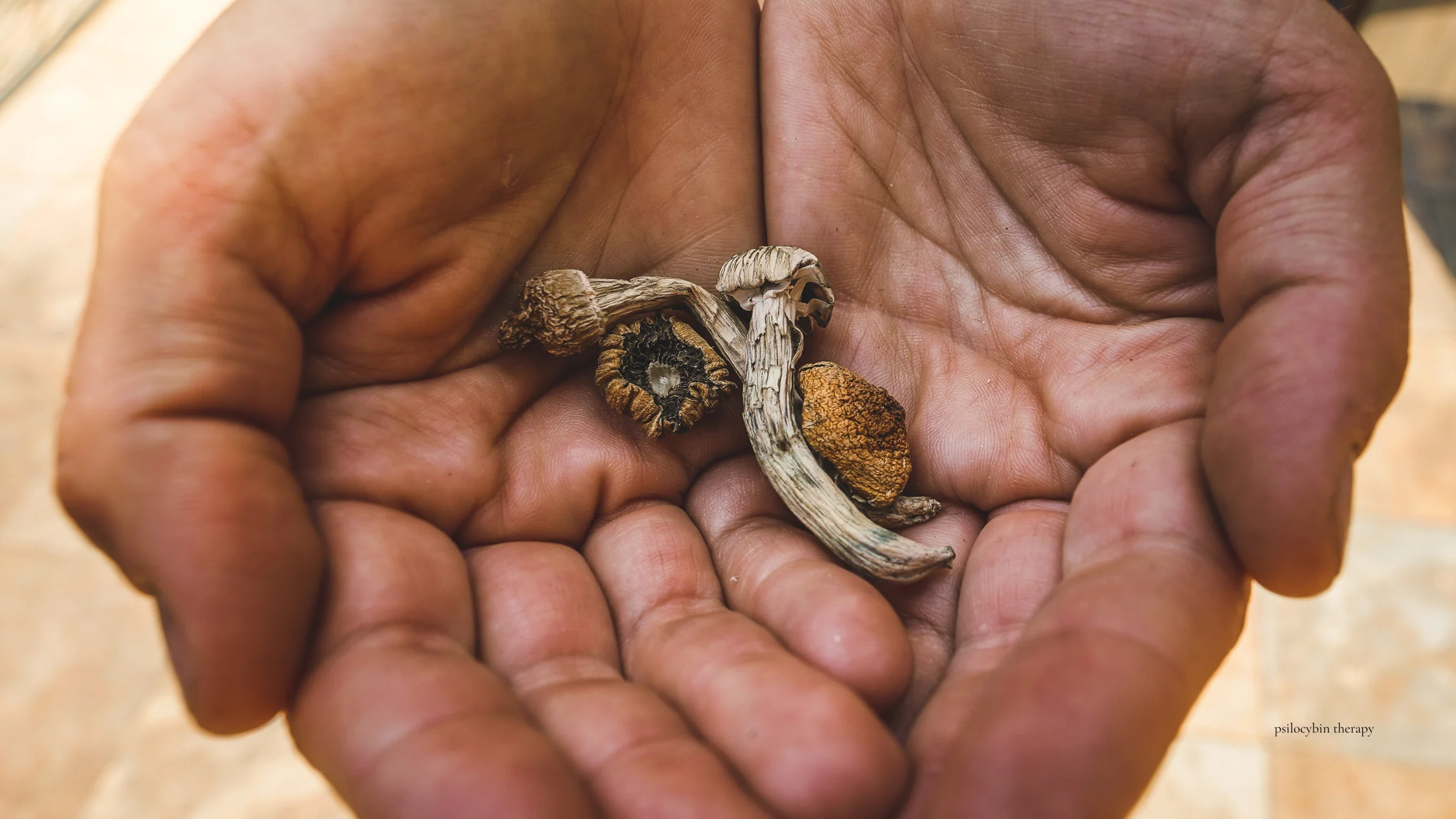
Psilocybin therapy is emerging as a powerful treatment for depression, anxiety, trauma, and addiction. Unlike traditional psychiatric medications, psilocybin promotes deep emotional and spiritual healing without many of the common side effects. It works by disrupting rigid neural patterns, including those in the brain’s Default Mode Network, and supports long-lasting mental health improvements—often described as “years of therapy in a single session.”
Why Traditional Mental Health Treatments Are Falling Short
It’s no secret we are in the midst of a mental health crisis – drowning in anxiety, depression, anger and disconnection. Western medicine traditionally defaults psychiatric medications as the first line of treatment – even before therapy.
And too often, those medications come with unwanted side effects – weight gain, insomnia, brain zaps, sexual dysfunction, inability to feel joy, and even suicidal ideation with some medication – the exact opposite of what the medication is supposed to help with. The result? A vicious cycle of medication trials, emotional ups and downs, and a growing internal belief of being broken beyond repair, that you’re doomed to be miserable forever.
But what if there’s another way? A way to support our mental health and heal the inner wounds underlying our suffering – without the pharmacological baggage, and that creates lasting and sustained change…
How psilocybin affects the brain and serotonin system.
It’s not just tripping. Psilocybin mushrooms contain psilocybin, that once ingested is rapidly converted in the body to psilocin which is the active form that affects the brain.
Psilocin is structurally similar to serotonin (5-HT) and binds to a subtype of serotonin receptor (5-HT2A). This 5-HT2A receptor is heavily concentrated in areas of the brain responsible for:
- mood regulation
- cognition
- imagination
- self-perception
When psilocin stimulates these receptors it changes how neurons fire, disrupting circuits like the Default Mode Network (DMN).
What is the Default Mode Network (DMN) and Why it Matters
The DMN could be referred to as our daily thinking and thought patterns, the “autopilot system” – that is active when we’re reflecting, daydreaming or thinking about ourselves. In depression and anxiety, the DMN can become overactive and so rigid that our thoughts and beliefs about self become inflexible. This leads us to reinforce negative beliefs and thought loops such as:
- “I’m worthless”
- “Nothing will ever get better”
- “I always fail”
The Ski Run Analogy
We can think of our brains as a ski slope. Over time, the same run is used repeatedly – forming deep ruts and making it difficult to take a different path. This is the DMN – the pathway the brain has been synchronized to take, due to repeating the same thoughts and behaviors over and over. However, when the ski run gets a fresh covering of snow, the pathway is no longer visible – and you may forge a new one. This is the psilocin – the fresh covering of snow that allows your brain to create and form new, healthier pathways.
This leads to:
- A “reset” of dysfunctional mental loops – suddenly those negative thoughts are not as prominent, or we can choose to think and believe more positive thoughts
- Increased communication between brain regions that rarely interact
- Reduced negative self beliefs and beliefs about others
- Dissolution of ego boundaries (letting go of usual identity constructs or “labels” related to self).
The Mystical Experience: A Powerful Catalyst for Healing
One of the most transformative aspects of psilocybin therapy is the mystical or spiritual experience. Mushrooms have the ability to reconnect us with spirit and to truly feel connection with something greater – and research shows that the depth and quality of the mystical experience is a strong predictor of lasting mental health benefits.
Common Features of the mystical experience:
- Ego dissolution – the sense of a separate “I” or “me” fades away
- Unity – feeling connected to something greater (nature, universe, God, divine presence, etc)
- Timelessness – sense of existing outside normal time and space
- Emotional Insight – revisiting past experiences with empathy, forgiveness, or a different perspective
- Positive mood – feelings of awe, peace, love, and gratitude.
These experiences often result in a deep re-evaluation of self, purpose, and priorities. It’s not uncommon to hear things like:
“It felt like 10 years of therapy in a single session.” or “It wasn’t what I expected, but it was exactly what I needed.”
Benefits of Psilocybin Therapy, According to Research
Numerous studies have shown the therapeutic potential of psilocybin:
- Griffiths et al. (2016, Johns Hopkins): One high-dose session significantly reduced depression and anxiety in patients with terminal illness.
- Carhart-Harris et al. (2017): fMRI scans showed reduced DMN activity and increased brain network connectivity.
- Davis et al. (2020): Two psilocybin sessions led to rapid and sustained improvements in major depressive disorder.
Participants in psilocybin therapy frequently report lasting and positive changes in mood and behavior such as
- Increased openness and empathy
- Greater mindfulness and presence
- Improved relationships
- Decreased depression, anxiety and trauma symptoms
- Decrease in substance use/abuse
- Strengthened connection with spirituality and intuition
Final Thoughts
Psilocybin therapy is not about escaping reality – it’s about confronting and reintegrating parts of the self that have been ignored, suppressed, or traumatized. Psilocybin mushrooms offer a powerful opportunity for healing, especially when combined with professional guidance and integration support.
As stigma fades and research expands, psilocybin is increasingly recognized as a legitimate, powerful tool in healing the whole person: body, mind, and spirit.
“We remember that we are not actually alone, that we are not our thoughts or our traumas, and that we are enough just as we are.”
To learn more: Reach out to me at jessica@intuitivelifewellness.com